
The problem
Specialist reference information is often scattered across sources. People need a clear way to find a cartridge, understand the source, and compare information without losing the caveats.
Reference & decision tools
Specialist information, made easier to explore.
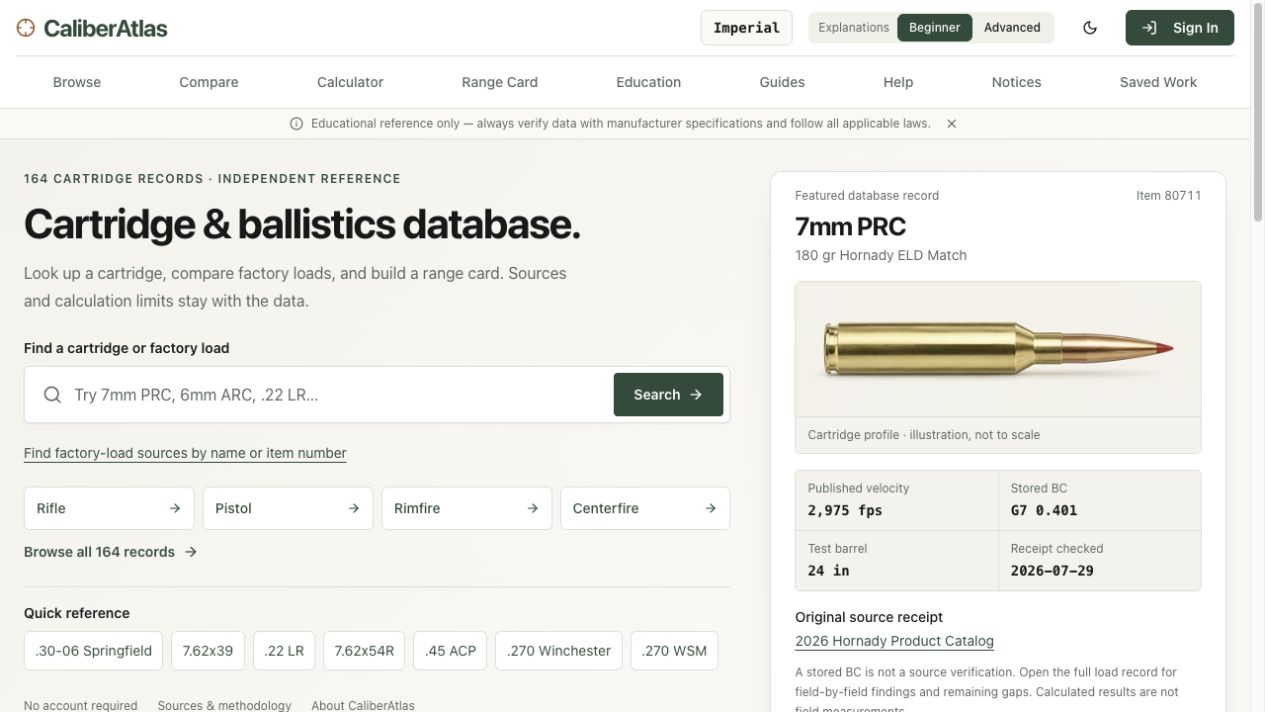
Specialist reference information is often scattered across sources. People need a clear way to find a cartridge, understand the source, and compare information without losing the caveats.
Caliber Atlas brings a searchable cartridge reference, comparison tools, and educational resources into one place. It distinguishes manufacturer-published inputs from modeled results and keeps source information close to the data.
AI-assisted research and software development support how we build and refine the product. Reference claims still need named sources; software behavior still needs testing. The site is an educational reference with its own published methods and limits.
Searchable knowledge tools with visible sources and understandable limits. The transferable idea is simple: help a reader distinguish what is published, what is estimated, and what still needs checking.
A CLOSER LOOK / DESIGNING FOR TRUST
A reference is more useful when a reader can see where the information came from and what still needs checking.
Manufacturer-published information, with its source and context.
Calculated results, with assumptions and limits kept visible.
User-recorded observations kept distinct from published references.
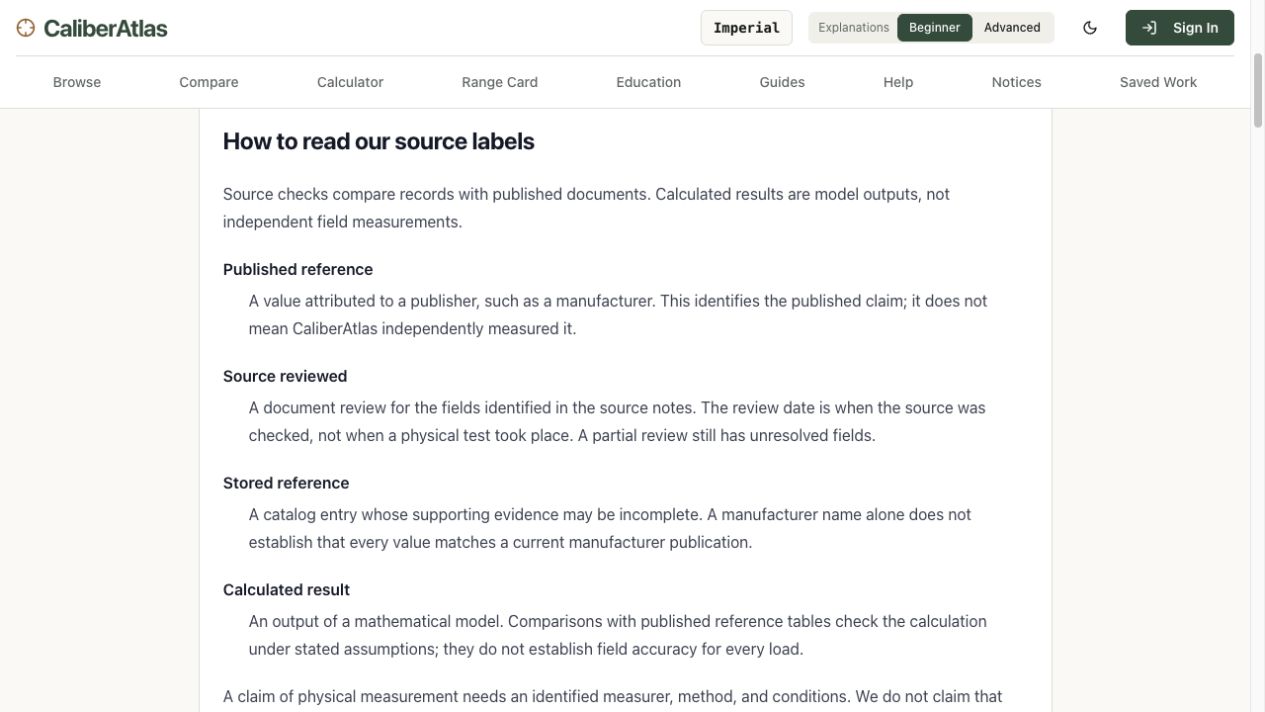
Give published claims, document reviews, stored entries, and modeled results distinct labels. Each label describes the kind of evidence behind the information.
The public methodology explains how source reviews work and where their coverage is incomplete. Readers can inspect the process and submit corrections with supporting sources.
A reviewed document is not an independent physical measurement. Evidence gaps and model limitations remain part of the product.
YOUR NEXT IDEA
A repetitive task. A disconnected process. An idea that needs a first version. Let’s start there.
Tell us about it